Brain Tumors: Advances in Surgical Techniques & What It Means for Patients in San Diego

Brain Tumor and Skull Base Surgery

Hearing the words brain tumor can be overwhelming and incredibly scary. For many patients and families, the diagnosis raises immediate questions and concerns about treatment, recovery, cost and long-term outcomes. Fortunately, advances in neurosurgical techniques have dramatically improved how surgeons approach these cases.

Modern brain tumor surgery is very different from what it was even a decade ago. Today’s procedures often rely on advanced imaging, highly precise surgical tools, and techniques designed to protect healthy brain tissue while removing as much of the tumor as possible.

For patients in San Diego, these advances mean safer procedures, better outcomes, and more treatment options than ever before.

Understanding Brain Tumors

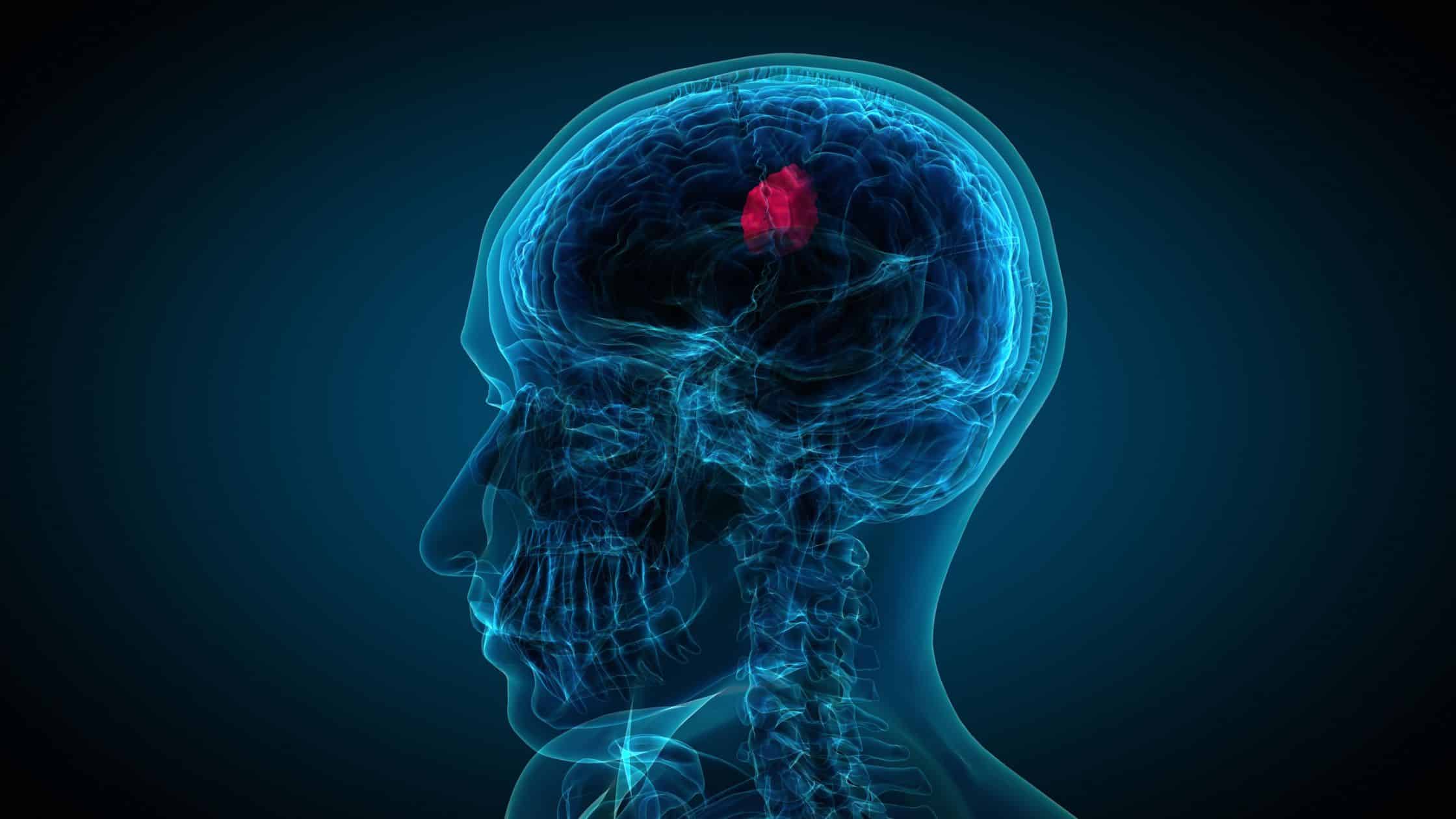
A brain tumor develops when abnormal cells grow within the brain or surrounding structures. Some tumors originate in the brain itself, while others spread from cancers elsewhere in the body.

Brain tumors fall into two broad categories:

  • Benign tumors, which are non-cancerous but can still cause problems as they grow
  • Malignant tumors, which are cancerous and may grow more aggressively

Even benign tumors can affect brain function depending on their size and location. Because the brain controls essential functions such as movement, speech, memory, and vision, a growing tumor can place pressure on surrounding tissue and lead to neurological symptoms.

Common Symptoms of Brain Tumors You Should Never Ignore

Brain tumors can produce a wide range of symptoms depending on where they develop in the brain. Some patients notice gradual changes, while others experience symptoms more suddenly.

Common signs may include:

  • Persistent headaches that worsen over time
  • Nausea or vomiting without a clear cause
  • Changes in vision or hearing
  • Difficulty with balance or coordination
  • Weakness or numbness in the face or limbs
  • Memory problems or confusion
  • Seizures

These symptoms do not always mean a brain tumor, but they should certainly not be ignored. Specialized imaging tests, such as MRI scans, help medical professionals accurately locate and identify the root cause so they can decide on the best way forward.

How Brain Tumor Surgery Has Evolved

Neurosurgery has changed significantly over the past two decades. Modern surgical techniques focus on removing tumors while minimizing damage to healthy brain tissue.

Several impressive innovations now guide brain tumor surgery, including:

Advanced Imaging and Surgical Planning

High-resolution MRI and CT imaging allow surgeons to study the tumor and surrounding structures in remarkable detail before entering the operating room.

These images help surgeons plan the safest approach to the tumor, identify critical brain areas, and most importantly, reduce surgical risk.

Intraoperative Navigation Systems

Many neurosurgeons now use computer-guided navigation systems during surgery. These systems function like a GPS for the brain, allowing surgeons to track their instruments in real time and maintain precise orientation throughout the procedure.

This technology improves accuracy and helps surgeons reach tumors that would have been difficult to treat in the past.

Microsurgical Techniques

Microsurgical tools and operating microscopes allow surgeons to work through very small openings with exceptional precision. These techniques help protect nearby nerves, blood vessels, and healthy brain tissue.

Smaller surgical corridors often mean less disruption to the surrounding brain and a smoother recovery for patients.

Awake Brain Surgery for Critical Areas

Surgeons may perform awake brain surgery when tumors are located near areas that control speech, movement, or other critical functions.

The patient is awake for part of the surgery and works with the surgical team on simple tasks such as speaking or moving their hand, allowing surgeons to monitor brain function in real time while removing the tumor.

Awake brain surgery may sound intimidating, but patients do not feel pain during the procedure since doctors numb the scalp with local anesthesia and use sedation to keep the patient relaxed. The brain itself does not have pain receptors, so patients cannot feel the tumor being removed.

Surgeons briefly wake the patient during certain parts of the operation so they can speak or move, which helps the surgical team protect important brain functions while safely removing the tumor.

Minimally Invasive Approaches to Consider

Some brain tumors can now be treated using minimally invasive techniques that reduce the size of surgical openings and shorten recovery time.

These approaches may include:

  • Endoscopic surgery, which uses small cameras and specialized instruments inserted through tiny openings
  • Keyhole craniotomy, a technique that allows surgeons to access the brain through a smaller skull opening
  • Laser interstitial thermal therapy (LITT), which uses targeted heat to destroy tumor tissue

Not every tumor can be treated this way, but when appropriate, minimally invasive techniques can reduce costly hospital stays and speed up recovery.

What These Advances Mean for Patients

The goal of brain tumor surgery has always been the same: remove as much of the tumor as possible while protecting brain function.

Advances in technology and surgical planning have made this goal far more achievable.

For patients, these developments often translate into:

  • Greater surgical precision
  • Lower risk of complications
  • Better preservation of neurological function
  • Shorter recovery times
  • More treatment options tailored to the individual patient

Every brain tumor is different, and treatment plans must reflect the tumor’s type, size, and location as well as the patient’s overall health.

Experienced Brain Tumor Care in San Diego

Brain tumor surgery requires careful planning, technical skill, and a deep understanding of the brain’s complex anatomy.

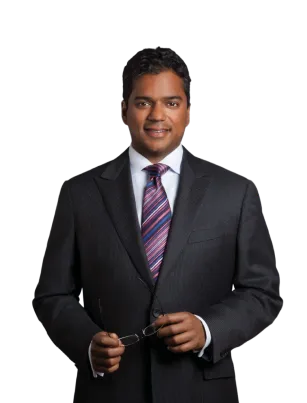
Dr. Sanjay Ghosh brings more than 20 years of neurosurgical experience treating complex brain and spine conditions. As Director of Neurosurgery at SENTA Clinic in San Diego, he evaluates patients with brain tumors using advanced imaging and modern surgical techniques designed to maximize tumor removal while protecting neurological function.

Dr. Ghosh has performed thousands of neurosurgical procedures throughout his career, including complex cranial surgeries for tumors located near critical areas of the brain.

For patients in San Diego facing a brain tumor diagnosis, access to experienced neurosurgical care can make a meaningful difference in treatment planning and outcomes.

If you or a loved one has been diagnosed with a brain tumor or is experiencing concerning neurological symptoms, a consultation can help clarify the diagnosis and explore the most appropriate treatment options.

Call (619) 810-1010 to schedule an appointment with Dr. Sanjay Ghosh.

Dr. Sanjay Ghosh is a board-certified neurosurgeon at SENTA Clinic in San Diego with fellowship training in complex spine and cranial base surgery. This content is educational and does not replace personalized medical advice.
Categories
Tags
Archives
Real Lives Transformed

Patients who regained strength and independence through precise, compassionate care.

Schedule a Consultation

If you’ve been diagnosed with an acoustic neuroma or are experiencing symptoms such as hearing loss or dizziness, contact Dr. Ghosh to discuss the best treatment options for you. Our team provides compassionate, evidence-based care tailored to each patient’s unique condition and lifestyle.

Meet Elisha
Elisha G.
Practice Relations Liaison

Proudly partnering with Elisha Green – Practice Relations Liaison.

Meet Lauren
Lauren G.
Assistant Office Manager

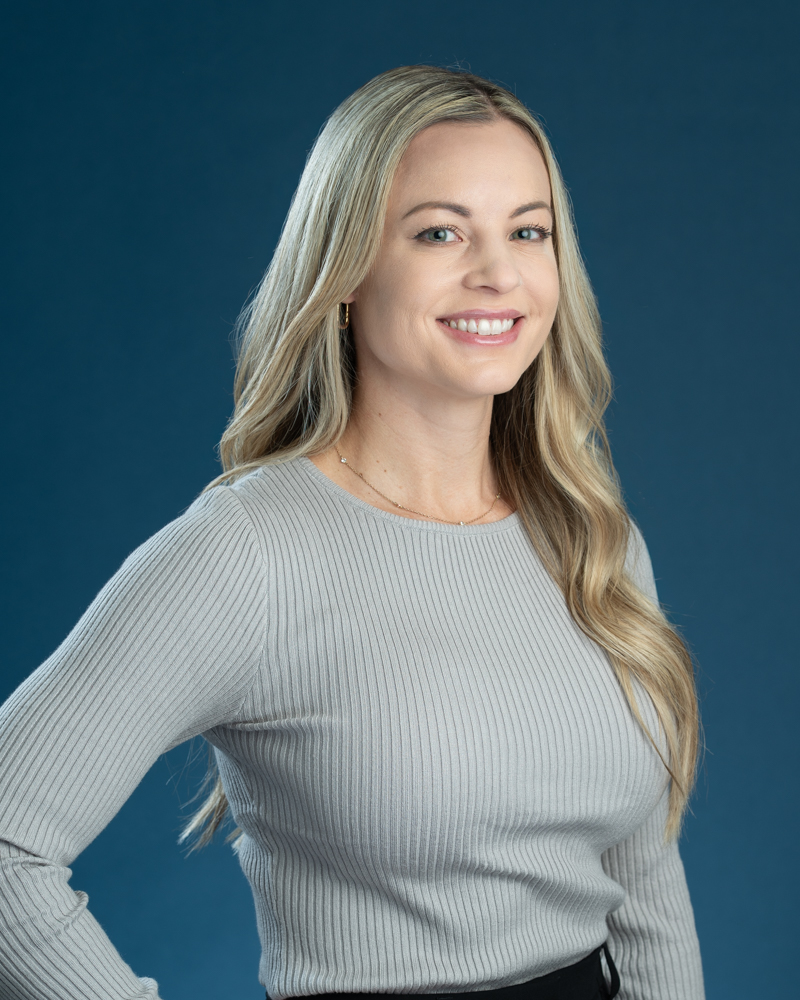
Lauren was born and raised in San Diego, California. She attended San Diego State University, graduating with a Bachelor of Arts degree in Communication in 2013. She began her professional journey in the hospitality field where she discovered her passion for helping others and building relationships. This eventually inspired her to pursue a career in healthcare, joining Sharp Healthcare in 2016 where she found great fulfillment in learning and growing within the medical field. Lauren began working with Senta Neurosurgery in 2017 supporting Dr. Sanjay Ghosh.

When not at work, Lauren enjoys spending time with her family, being an Auntie, traveling, and being outdoors.

Dr. Ghosh, I just wanted to take a moment & thank you again for all you have done for my husband, Benton (Rick) Coulter. June 26th he was brought by ambulance to Grossmont Hospital. That was the beginning of the scariest days of our lives. When we were told he needed brain surgery we were stunned, confused & not sure what to do. We asked for a second opinion by you. Within 30 minutes you were at Rick’s bedside. You were friendly, caring & confident. After examining him you told us he would need two surgeries instead of one. You even called me at home to answer our many questions. Thank you for treating us with such respect. You were available & patient as we tried to make a decision. Once we decided you were the right Dr. we had continuous confirmations that we had chosen the right one. We will be forever grateful to you! You saved my husband’s life and his sight. God used you in a mighty way & He answered our prayers. Thank you for all the work it took to be a Brain Surgeon & to help others like us. You are not only skilled but you are also caring. We appreciate you so much.
Sincerely, Karen Coulter
So far I have been taken great care of by Dr. Ghosh and his staff. Dr. G has spent quality time with me reviewing my symptoms and MRI’s etc that are a result of a day at a water park turn into one of the worst injuries I have ever had. What I appreciated the most was our efforts as a team to exhaust all options of pain management and PT before coming to the decision that no relief is in sight without surgery. I had already been referred to Dr. G’s office by other friends and patients so I’m very comfortable moving forward with Dr. Ghosh and his team.
Former Patient
I was referred to Dr. Ghosh by my corporate physician. She had heard good things about Dr. Ghosh. I went to several other neurosurgeons. They were all excellent but I just liked Dr. Ghosh’s confidence and frank manner. My surgery was quick and the result was excellent. My recovery time was minimal. The incision, with a little more time will be minimal and not noticeable. The pain I have felt for a long time is gone. I’ve noticed that others feel that Dr. Ghosh and Amanda did not spend enough quality time with them. My time with them was brief. I don’t need alot of hugs and hand holding. I just needed them to provide me with the information I needed to make decisions, which they did to my satisfaction. They are seeing alot of patients. I don’t think it would be fair to others if Dr. Ghosh and Amanda had to spend several hours caring for my psychological needs when all they really needed to do is fix my neck. Amanda is truly capable. I had an issue late on a holiday night. I called. They transferred me to her even though she was at a social event. I explained to her my concerns. She told me what to expect and under what circumstances to come back to the office.For those who felt abandoned and that they didn’t get enough time, you might find other surgeons even more unavailable. Dr. Ghosh stated he was starting to take less patients to try and spend a little more time with each patient. I hope he doesn’t. It won’t be fair to the people who won’t benefit from his talents. A special thank you to Dr. Ghosh and his team.
Former Patient
Meet Edith
Edith Smith
Director of Operations

Edith was born in Budapest, Hungary and immigrated to Los Angeles, CA as a small child.  She later received a Bachelor of Arts degree in Economics from the University of California, San Diego in 1996. From 1997 to 2002, she worked as a Program Manager at Qualcomm, during which time she also obtained a Certificate in Project Management from the University of San Diego. Edith took some time off to start her family but remained active in her volunteer efforts supporting Rady Children’s Hospital Auxiliary, where she co-chaired nine large fundraising events and served on the Board of Directors for 5 years. During her time at Rady Children’s, Edith became passionate about healthcare and neurosurgery in particular when her daughter became a neurosurgical patient at Radys. Edith joined Senta Neurosurgery’s team supporting Dr. Sanjay Ghosh’s practice in 2019. Given her personal experiences, Edith knows that getting a referral to neurosurgery is a stressful, life altering event, so she truly appreciates being part of the patient care process for Dr. Ghosh’s patients.

When not at work, Edith enjoys spending time with her friends and family, traveling, cooking, and entertaining.

Meet Melissa
Melissa Padilla
Surgery Coordinator

Melissa has an Associate of Science Degree in Medical Office Administration. She has worked in healthcare for over 25 years. She started out working in a radiology department processing film and scheduling exams. Melissa joined Dr. Ghosh’s team in 2003 and uses her skills and experience to schedule Dr. Ghosh’s patients for surgery.  She is a fierce advocate for our patients throughout the entire prior authorization and scheduling process, and her goal is to make the scheduling of our patients’ surgeries organized and stress free so that our patients can focus on healing.

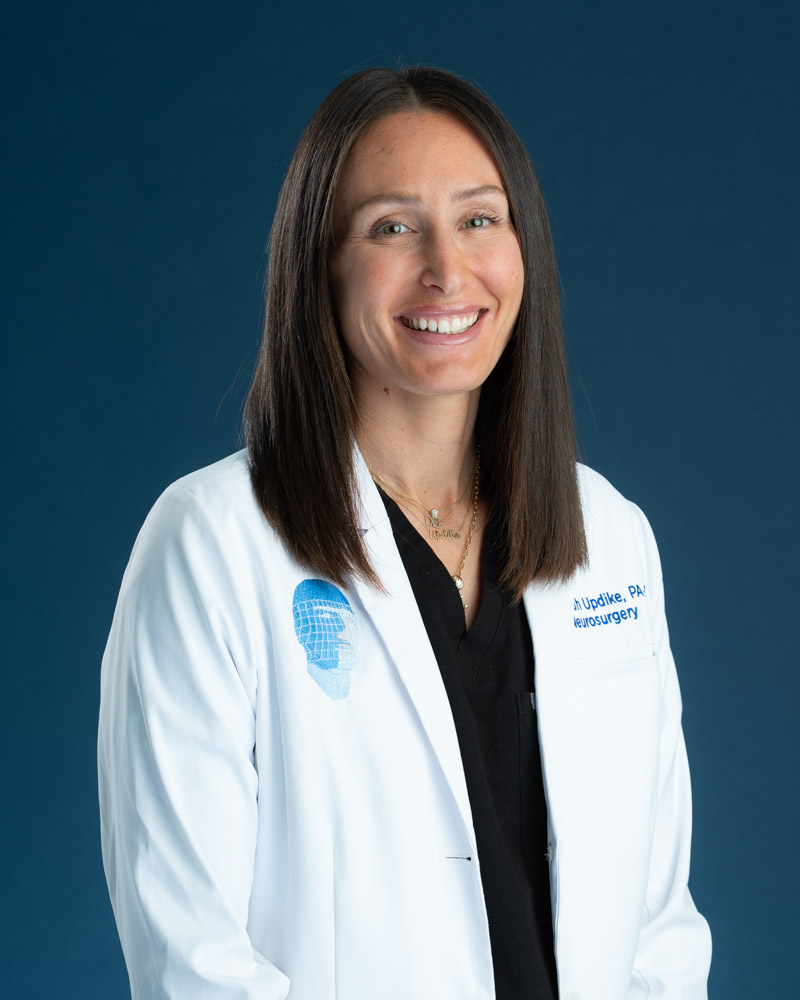
Meet Deborah
Deborah Updike
M.M.S, M.S., PA-C

Deborah is a California native. She attended American University in Washington, DC graduating with a Bachelor of Science in Marine Science and Environmental Studies. She was a college athlete, playing NCAA D1 volleyball all four years. She then attended California State University, Long Beach where she received a Masters of Marine Science in Shark Reproductive Physiology. During her first masters degree, she began transitioning into medicine and went on to receive her Master of Medical Science degree in Physician Assistant studies at Midwestern University in Downers Grove, IL. Deborah served as class Vice President. She graduated in 2017 and has been working at Senta Neurosurgery ever since. Deborah is a member of the American Academy of Physician Assistants.

Meet Edith
Edith Smith
Director of Operations

Edith was born in Budapest, Hungary and immigrated to Los Angeles, CA as a small child.  She later received a Bachelor of Arts degree in Economics from the University of California, San Diego in 1996. From 1997 to 2002, she worked as a Program Manager at Qualcomm, during which time she also obtained a Certificate in Project Management from the University of San Diego. Edith took some time off to start her family but remained active in her volunteer efforts supporting Rady Children’s Hospital Auxiliary, where she co-chaired nine large fundraising events and served on the Board of Directors for 5 years. During her time at Rady Children’s, Edith became passionate about healthcare and neurosurgery in particular when her daughter became a neurosurgical patient at Radys. Edith joined Senta Neurosurgery’s team supporting Dr. Sanjay Ghosh’s practice in 2019. Given her personal experiences, Edith knows that getting a referral to neurosurgery is a stressful, life altering event, so she truly appreciates being part of the patient care process for Dr. Ghosh’s patients.

When not at work, Edith enjoys spending time with her friends and family, traveling, cooking, and entertaining.

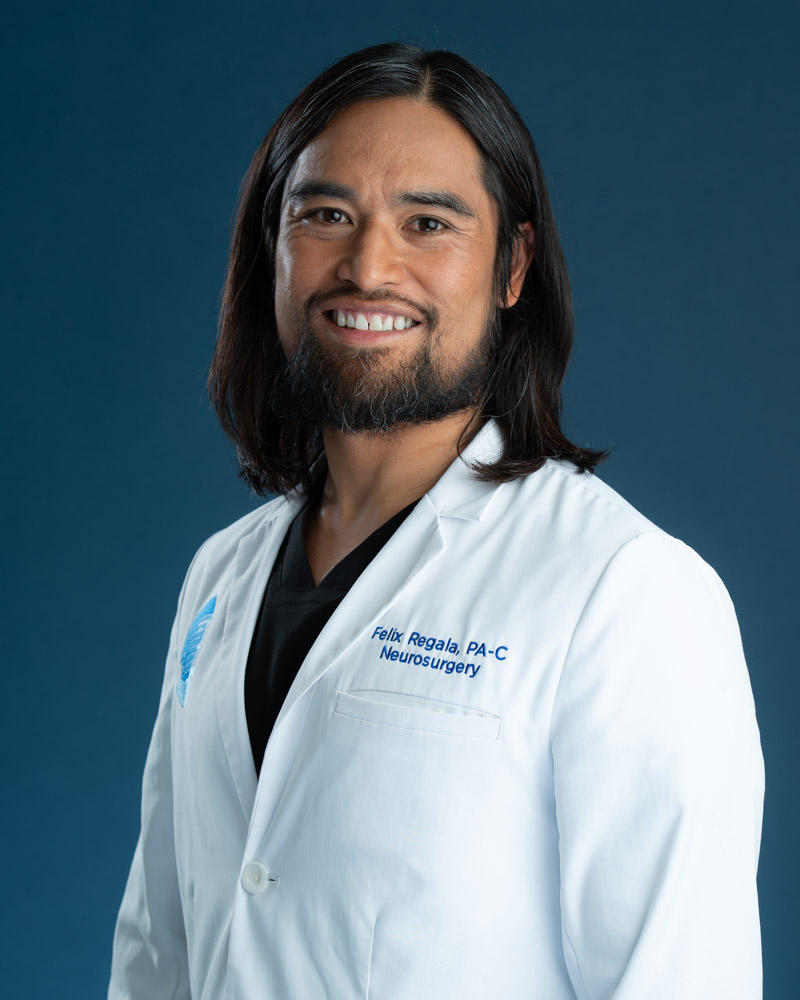
Meet Felix
Felix Regala
MPAP, PA-C

Felix was born and raised in Abilene, Texas where he graduated from Abilene High School in 2001. He was honored with the Chuck and Doris Moser Scholarship for his accomplishments as a varsity athlete in baseball and his excellence in academics and community service. He then attended Baylor University where he graduated in 2004 with a Bachelor of Science degree in biology. Felix then spent a couple of years working in the laboratory at the Salk Institute for Biological Studies and Johnson & Johnson. He then went on to the Keck School of Medicine at University of Southern California to obtain his Master of Physician Assistant Practice degree. Felix graduated from physician assistant school in 2010. While pursuing his PA degree at USC, Felix served as class president and spent time training in neurosurgery and orthopedic spine.  Felix has been a PA with Dr. Ghosh since May 2011.

Felix enjoys being active, including playing basketball, surfing, snowboarding, golfing, and exercising. Felix is also a member of the American Academy of Physician Assistants and the California Academy of Physician Assistants.

Meet Amanda
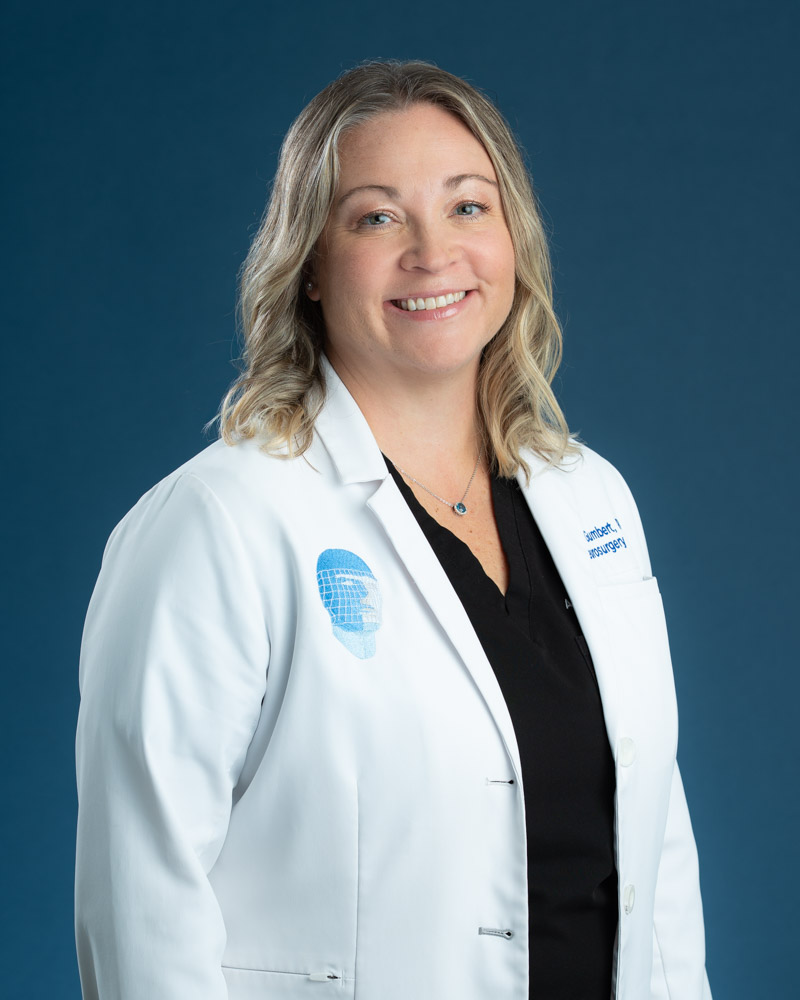
Amanda W. Gumbert
M.M.S, PA-C

Amanda received her Bachelor of Science degree in Kinesiology at San Diego State University in 2002. She worked as an Exercise Physiologist at the Cardiac Treatment Center at Scripps Memorial Hospital La Jolla before going to PA School. Amanda graduated from Midwestern University in Glendale, Arizona with a Master of Medical Science degree in Physician Assistant studies in 2005. She began working for Dr. Ghosh in January 2006 working as the senior Physician Assistant and manager of the PAs.   Amanda has spoken at the national level at the AAPA conference on various neurosurgical topics. She is highly committed to the future Physician Assistants and frequently has students shadow her and acts as a PA student preceptor. She is a member of the American Academy of Physician Assistants, Association of Neurosurgical Physician Assistants, and The San Diego Society of Physician Assistants.  Amanda is honored to be a finalist for San Diego Magazine’s Woman of the Year— 2025 Healthcare Pioneer.

When not working, Amanda enjoys hiking, mountain biking, stand up paddle boarding, snowboarding, playing with her dogs and spending time with her family.

San Diego Magazine’s Celebrating Women
2025 Healthcare Pioneer Finalist