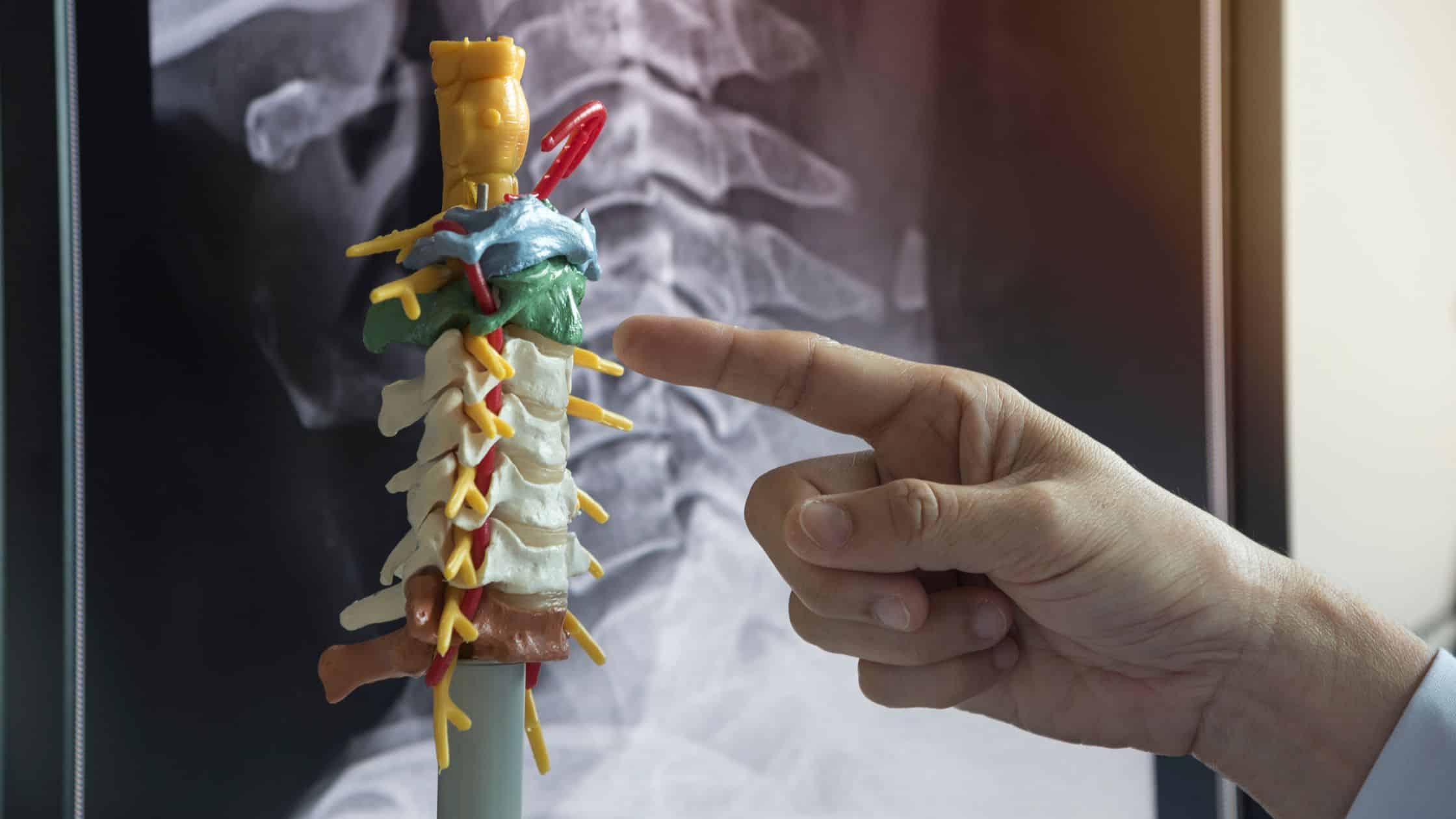
Neck pain with shooting pain, numbness, or weakness down the arm can be scary. When medications, physical therapy, and injections are not enough, your spine specialist may bring up anterior cervical discectomy and fusion, or ACDF.
ACDF is a well-established neck surgery that removes a damaged disc from the front of the neck and fuses the surrounding vertebrae to stabilize the spine and relieve pressure on nerves or the spinal cord.
For patients considering ACDF in San Diego, understanding each step of the procedure and the recovery timeline can make the decision feel less overwhelming and more informed.
Quick Answer
ACDF is a surgery where a spine surgeon:
- Reaches the cervical spine through a small incision in the front of the neck,
- Removes the damaged disc and any bone spurs compressing nerves or the spinal cord,
- Places a spacer or graft between the vertebrae, often with a small plate and screws, so the bones can fuse into one solid segment.
Most patients having ACDF surgery in San Diego:
- Go home the same day or after one night in the hospital,
- Notice arm pain relief relatively quickly,
- Return to light activities in a few weeks, while full fusion can take several months.
When Is Anterior Cervical Discectomy and Fusion Recommended
ACDF is usually offered when a structural problem in the neck is clearly causing nerve or spinal cord compression, and non-surgical care has not helped enough. Common reasons include:
- Herniated cervical disc, causing arm pain, numbness, or tingling,
- Cervical spinal stenosis, where the narrowed canals pinch the nerves or cord,
- Degenerative disc disease with bone spurs and disc collapse that match your symptoms and exam.
Typical symptoms that may lead to an ACDF discussion:
- Persistent neck pain with shooting pain into the shoulder, arm, or hand,
- Numbness or tingling in a specific pattern down the arm,
- Weaknesses in the arm or hand, difficulty gripping or lifting,
- Progressively worsening hoarseness,
- Trouble with balance or coordination when the spinal cord is involved.
In most cases, anterior cervical discectomy in San Diego is considered only after a reasonable trial of rest, medications, and physical therapy, unless there is a significant or worsening neurologic deficit.
How to Prepare for ACDF Surgery in San Diego
Before ACDF, your surgeon will:
- Review your history and perform a detailed neurologic exam,
- Confirm the problem level with imaging such as MRI, sometimes CT, or X-rays,
- Make sure the imaging, exam findings, and symptoms all line up.
You may also:
- Have blood tests and, if needed, a heart or medical clearance visit,
- Get instructions on when to stop blood thinners or certain medications,
- Receive fasting instructions for the night before surgery,
- Be advised to stop smoking, if possible, since smoking can slow fusion and healing.
Practical tips: arrange a ride home, help at home for the first days, and plan time off work based on your job demands.
ACDF Surgery: What Happens Step by Step
1. Anesthesia and Positioning
- You receive general anesthesia and are fully asleep for the entire procedure.
- You are positioned on your back with the neck gently extended and supported.
2. Small Incision in the Front of the Neck
- The surgeon makes a small incision, often one to two inches, in a natural crease on the front or side of the neck.
- Soft tissues, including the windpipe and esophagus, are gently moved aside to expose the front of the spine.
3. Disc Removal and Decompression
- The damaged disc is removed from between the vertebrae at the target level.
- Bone spurs and thickened ligaments that are pressing on the nerve roots or spinal cord are trimmed away to create more space.
- The goal is to free the nerves and, when needed, the spinal cord from compression.
4. Fusion and Implant Placement
- A spacer or cage filled with bone graft, from a donor or a synthetic material, is placed in the disc space to restore height and alignment.
- A small plate and screws may be attached to the front of the vertebrae to hold everything stable while the bones fuse.
Over time, the bone grows across the disc space, turning two vertebrae into one solid segment.
5. Closure and Wake Up
- The surgeon checks alignment, controls bleeding, and closes the tissues and skin with sutures, staples, or glue.
- You are taken to the recovery area where nurses monitor pain, breathing, and neurologic status as you wake up.
Many ACDF procedures, especially single-level surgeries, take about one to three hours, depending on your anatomy and how many levels are involved.
Right After ACDF: Recovery Room and First Night
In the recovery room and on the first night, you can expect:
- Throat soreness and swallowing discomfort, because the esophagus and tissues in the front of the neck were gently moved during surgery,
- Neck stiffness and incisional pain,
- Often, improvement in arm pain fairly quickly once the nerve is decompressed.
You will:
- Transition from intravenous to oral pain medicine,
- Begin sitting up and walking short distances with help,
- Be monitored for breathing, swallowing, and neurologic function.
Many patients go home the same day or after one night, depending on age, health, and how many levels were treated.
ACDF Recovery: Weeks to Months
Recovery is a process, not a single moment. Patterns from large centers look similar to this:
Recovery Guideline Table (Approximate Only)
| Phase | Typical Timeframe | What Many Patients Experience |
| Immediate post op | First few days | Throat soreness, neck pain, walking short distances, and arm pain often improved |
| Early recovery | Weeks 1–4 | More walking and light daily tasks, lifting and driving restrictions, decreasing pain meds |
| Intermediate recovery | Weeks 4–12 | Return to light work for many, start or progress physical therapy, and more neck motion as allowed |
| Fusion and long term | 3–12 months | Bone fusion continues, strength and endurance improve, gradual return to full activities |
Guideline note: This table is a general guide only. Your ACDF recovery timeline will depend on your health, the number of levels fused, bone quality, and how closely you follow your surgeon’s instructions.
Bracing, Bending, and Lifting After ACDF
Some surgeons use a soft or rigid neck collar for a period after ACDF; others may not, depending on the hardware and your bone quality.
Common early restrictions include:
- No heavy lifting, often nothing heavier than a few kilograms, until cleared,
- Avoiding overhead reaching and sudden neck movements,
- Limiting driving until you are off narcotic pain medicine and can turn your head safely.
Physical therapy and range of motion exercises usually begin once your surgeon is confident the fusion and hardware are stable enough, often around four to six weeks, but this is individualized.
Risks and Possible Complications of ACDF
All surgeries carry risk. ACDF-specific risks your surgeon may discuss include:
- Hoarseness or voice changes, usually temporary, due to irritation of the nerve that moves the vocal cord,
- Difficulty swallowing, which often improves over days to weeks,
- Nonunion, where the bones do not fully fuse, is more likely in smokers or people with poor bone quality,
- Adjacent segment degeneration, where levels above or below the fusion develop wear and tear over many years,
- Standard surgical risks, such as infection, bleeding, blood clots, or anesthesia problems.
Serious complications are not common but understanding them helps you give informed consent.
When to Call Your Surgeon After ACDF
After going home, contact your surgeon promptly or seek urgent care if you notice:
- Fever or chills with increasing neck pain,
- Redness, swelling, or drainage from the incision,
- New or worsening weakness, numbness, or difficulty using your arms or legs,
- Severe trouble swallowing or breathing,
- Loss of bladder or bowel control, or new numbness in the groin or saddle area.
It is always better to ask early than to wait and worry.
ACDF and Other Options
ACDF is a long-established operation with high rates of arm pain relief when the main problem is nerve root compression that matches imaging and exam findings.
In some patients, other procedures may be discussed, such as:
- Posterior decompression procedures,
- Cervical disc replacement at selected levels in appropriate candidates.
A spine specialist who is experienced in multiple cervical approaches can help you weigh the pros and cons for your specific situation.
Questions to Ask Your ACDF Surgeon in San Diego
Before deciding on ACDF in San Diego, consider asking:
- What is the main goal of surgery for me: relief of arm pain, spinal cord protection, neck pain relief, or all of these
- How many levels will be fused
- What non-surgical treatments have I tried, and why is surgery recommended now
- What are my personal risk factors for nonunion or complications
- How long will I likely be off work, and when will physical therapy start
- What does your experience and outcome data look like for patients similar to me
Bringing a written list of questions can make your consultation more productive and help you feel confident about your decision.
Final Thoughts
Anterior cervical discectomy and fusion is a carefully planned procedure that:
- Removes a damaged disc and bone spurs from the front of the neck,
- Relieves pressure on nerves and, when needed, the spinal cord,
- Stabilizes the spine so bones can fuse into a solid segment.
For the right patient, ACDF can significantly reduce arm pain, improve function, and protect the spinal cord. Understanding the steps of the operation, the recovery phases, and the possible risks helps you make a thoughtful, informed choice with your spine surgeon.
If you are considering ACDF surgery in San Diego, a detailed consultation with a neurosurgeon or orthopedic spine surgeon can clarify whether this procedure is appropriate for your condition and what results you can realistically expect.
Dr. Sanjay Ghosh is a board certified neurosurgeon at SENTA Clinic in San Diego, fellowship trained in complex spine and cranial base surgery. This content is educational and not a substitute for personalized medical advice.
Reference Links
- Cleveland Clinic – ACDF (Anterior Cervical Discectomy & Fusion) Surgery
Overview of ACDF, indications, procedure details, risks, and recovery. (Cleveland Clinic)
https://my.clevelandclinic.org/health/procedures/acdf-surgery - Hospital for Special Surgery – ACDF Surgery: Anterior Cervical Discectomy and Fusion
Patient friendly explanation of ACDF, reasons for surgery, and expected recovery. (Hospital for Special Surgery)
https://www.hss.edu/health-library/conditions-and-treatments/acdf-surgery - NHS (UK) / NHS Tayside – Anterior Cervical Discectomy and Fusion Patient Leaflet
Describes what ACDF is, why it is done, and postoperative expectations. (nhstaysidecdn.scot.nhs.uk)
https://www.nhstaysidecdn.scot.nhs.uk/…/PROD_267486 - Washington University Neurosurgery – ACDF Patient Information
Detailed patient handout on the ACDF procedure, indications, and recovery. (Taylor Family Department of Neurosurgery)
https://neurosurgery.wustl.edu/app/uploads/2023/09/ACDF.pdf - AAOS OrthoInfo – Surgical Treatment for Cervical Radiculopathy
Discusses surgical options for cervical nerve compression, including anterior approaches such as ACDF. (OrthoInfo)
https://orthoinfo.aaos.org/en/treatment/cervical-radiculopathy-surgical-treatment-options