When neck or back pain does not improve with medication, injections, or physical therapy, your spine specialist may recommend surgery to remove a damaged disc. At that point, many patients in San Diego hear two main options: artificial disc replacement and fusion.
Both procedures aim to relieve pressure on pinched nerves and reduce pain. However, they handle the spine very differently. Disc replacement tries to preserve motion at the treated level, while fusion intentionally stops motion to provide stability.
This guide explains how each works, the pros and cons, and how surgeons think through the choice, so you can have a more informed conversation about options such as artificial disc replacement or ACDF in San Diego.
Quick Answer
Artificial disc replacement removes a damaged disc and inserts a motion-preserving implant; fusion removes the disc and joins the vertebrae, so they grow into one solid segment. Both can relieve nerve compression when the main problem is disc-related.
- Disc replacement, often called cervical disc arthroplasty in the neck:
- Preserves motion at the treated level.
- Works best for carefully selected patients with single-level disc disease, good bone quality, and minimal arthritis.
- Fusion, such as ACDF in the neck or lumbar fusion in the low back:
- Eliminates motion at the operated level to provide stability.
- Has a long track record and can treat multi-level disease, deformity, or instability.
The “right” choice depends on your diagnosis, anatomy, goals, and candidacy for disc replacement rather than fusion.
Where Are These Procedures Used
Artificial disc replacement and fusion are used in both the neck and low back, but not in the same way:
- Cervical spine
- Cervical disc replacement is an alternative to ACDF for some patients with single-level or selected two-level disc disease and radiculopathy.
- Lumbar spine
- Lumbar disc replacement exists, but indications are more limited, and many patients with low back and leg pain are still treated with lumbar fusion procedures.
Most of the strongest long-term evidence comparing disc replacement and fusion comes from cervical studies.
What Is Spinal Fusion
Fusion Basics
Spinal fusion is designed to stop motion at a painful or unstable segment:
- The surgeon removes the painful or degenerated disc.
- A cage or bone graft is placed between the vertebrae to restore height and alignment.
- Screws, plates, or rods secure the bones while they heal together.
Over months, bone grows across the disc space so the vertebrae form one solid unit.
When Fusion Is Commonly Used
Fusion is often chosen when there is:
- Multi-level degeneration or stenosis.
- Spondylolisthesis or clear instability.
- Significant deformity or kyphosis.
- Advanced facet joint arthritis or collapsed discs.
In these settings, stability is just as important as decompression.
What Is Artificial Disc Replacement
Disc Replacement Basics
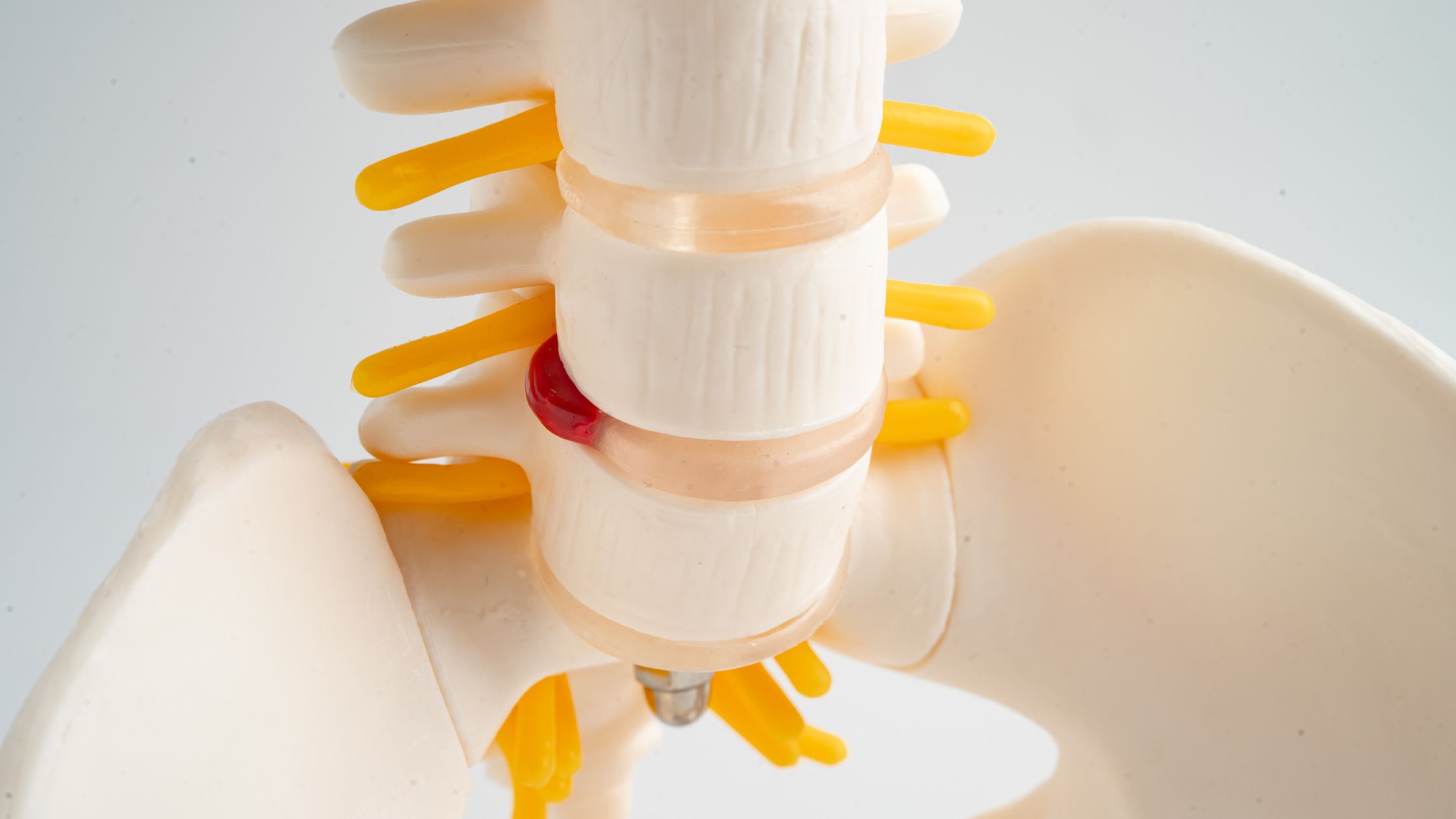
Artificial disc replacement, also called disc arthroplasty, is a motion-preserving surgery:
- The damaged disc is removed.
- An artificial disc made of metal and sometimes plastic is inserted between the vertebrae.
- The implant is designed to allow controlled bending, extension, and rotation, similar to a healthy disc.
Typical Disc Replacement Candidates
Based on current evidence and guidelines, disc replacement is usually considered when:
- There is a single-level (or selected two-level) disc disease causing radiculopathy.
- Imaging matches symptoms and exam.
- Facet joints are reasonably healthy; there is no major deformity or instability.
- Bone quality is good, and there is no significant osteoporosis or active infection.
It is not usually offered when there is significant instability, multi-level deformity, severe facet arthritis, or poor bone quality.
Artificial Disc Replacement vs Fusion: Key Differences
Side-by-Side Comparison
| Feature | Artificial Disc Replacement (ADR) | Fusion (ACDF or Lumbar Fusion) |
| Motion at treated level | Preserved; implant allows controlled motion | Eliminated; vertebrae grow together as one unit |
| Typical levels | Single level; selected two-level cases in some patients | One or multiple levels, including complex cases |
| Bone quality requirement | Needs good bone quality for fixation | More flexible; fusion can be planned around bone quality |
| Adjacent segment stress | May lessen stress on nearby levels in some cervical studies | May increase motion and load at adjacent segments over time |
| Long-term concerns | Device wear, loosening, possible need for revision or conversion | Non-union (pseudoarthrosis), hardware issues, and adjacent degeneration |
| Ideal candidates | Younger to middle-aged, active, isolated disc disease, minimal facet arthritis | Broader range, including deformity, instability, multi-level disease |
Some randomized trials and meta-analyses report that cervical disc replacement can yield pain and function scores similar to or slightly better than those of ACDF, with lower reoperation rates and less adjacent segment disease at 5 to 10 years in carefully selected patients.
However, fusion remains the standard for many complex cervical and lumbar conditions where motion preservation is not safe or useful.
Pros and Cons of Fusion
Pros
- Long track record with decades of data in both cervical and lumbar spine surgery.
- Very flexible; can treat multi-level disease, deformity, and instability.
- Works even when there is significant facet arthritis or advanced degeneration.
Cons
- Loss of motion at the fused level; stiffness is more noticeable if several levels are fused.
- Adjacent segment degeneration may develop over time; fusion can shift motion and stress to levels above and below, and some patients eventually need further surgery.
- Fusion takes months to consolidate; there is a risk of non-union in some patients, especially smokers or those with poor bone quality, which can require revision surgery.
Pros and Cons of Artificial Disc Replacement
Pros
- Motion preservation at the treated level, which can feel more natural for some patients.
- May reduce stress on adjacent levels compared with fusion in certain cervical studies, with lower rates of later surgery at nearby segments.
- No need for bone fusion at that level, so there is no risk of non-union there.
Cons
- Strict candidacy; not ideal if you have advanced facet arthritis, deformity, significant instability, or osteoporosis.
- Device-related issues such as wear, loosening, or heterotopic ossification (extra bone growth) can occur and, in some cases, reduce motion or require revision.
- Long-term data beyond certain time frames are still developing for some devices, whereas fusion has extensive long-term experience.
Recovery Timeline: ADR vs Fusion
Exact recovery times vary, but patterns from large centers and studies look something like this.
Recovery Guideline Table (Approximate Only)
| Phase | Artificial Disc Replacement (Approximate) | Fusion (ACDF or Lumbar Fusion, Approximate) |
| Hospital stay | Same day or 1 night for many single-level cervical cases | Often 1 to 2 nights for cervical or single-level lumbar fusion |
| First 2 to 4 weeks | Walking, a light daily activity, limited lifting; neck or back motion often allowed within guidelines | Walking and light activity; more cautious about bending, lifting, and twisting while fusion starts |
| 4 to 12 weeks | Gradual return to work and exercise, depending on job and symptoms | Increasing activity; fusion still maturing; some restrictions remain |
| 3 to 12 months | Long-term adaptation; implant function monitored | Fusion consolidation; long-term activity and exercise plan refined |
Guideline note: This table is a general guideline only. Recovery timelines vary depending on the specific procedure, number of levels, your overall health, and your surgeon’s instructions.
Risks and Long-Term Considerations
Both disc replacement and fusion share general surgical risks: infection, bleeding, blood clots, anesthesia problems, and possible nerve injury.
Beyond that:
- Fusion long-term issues
- Non-union or incomplete fusion may cause ongoing pain or hardware stress.
- Adjacent segment degeneration can appear years later and occasionally requires further surgery.
- Disc replacement long-term issues
- Implant wear, loosening, or malposition can occur and might require revision or conversion to fusion.
- Heterotopic ossification can form bone around the implant and reduce motion in some cases.
Regular follow-up and imaging help detect these issues early.
Who Might Be Better Suited for Each
Every case is individual, but patterns from current evidence are:
Patients who may be disc replacement candidates
- Single-level cervical disc disease with clear radiculopathy and matching imaging.
- Healthy, younger to middle-aged adults who want to preserve motion.
- Minimal facet joint arthritis and no significant deformity or instability.
- Good bone quality without advanced osteoporosis.
Patients who may be better fusion candidates
- Multi-level disc disease or stenosis.
- Significant deformity, spondylolisthesis, or documented instability.
- Advanced facet arthritis or collapsed discs where motion preservation would be painful.
- Prior surgery or complex alignment issues that require a more extensive reconstruction.
For patients in San Diego, a spine specialist who is familiar with both approaches can help weigh which option fits your anatomy, symptoms, and goals.
Questions to Ask Your Spine Surgeon
Before you decide between artificial disc replacement and fusion, consider asking:
- Am I a candidate for disc replacement, fusion, or both, and why
- What is the main goal of surgery in my case: relief of arm or leg pain, neck or back pain, protection of the spinal cord, or all of these
- How many levels need treatment, and how does that affect the choice between ADR and fusion
- What are the short term and long-term risks of each option for someone with my health and imaging
- What are realistic expectations for pain relief, motion, and return to work or sports
- If the first operation is a disc replacement and it fails or wears out, what are my revision options
- If we choose fusion, what is my risk of non-union or adjacent segment problems, and how would we manage them
A second opinion can be very helpful before making a permanent decision about motion preservation versus fusion.
Final Thoughts
Artificial disc replacement and fusion are not competing “good” and “bad” surgeries. They are different tools for different types of spine problems.
- Disc replacement focuses on preserving motion at the treated level for carefully selected patients.
- Fusion focuses on stability and alignment, and is often preferred when the disease is more extensive or complex.
For patients considering artificial disc replacement or fusion in San Diego, the most important step is an honest, detailed conversation with a spine specialist who reviews your symptoms, imaging, lifestyle, and goals. The best choice is the one that fits your anatomy and offers the most benefit with the least reasonable risk.
Key Takeaways
- Artificial disc replacement preserves motion at the treated level; fusion eliminates motion to provide stability.
- Disc replacement is usually limited to well-selected patients with single-level disc disease, good bone quality, and minimal facet arthritis.
- Fusion has a longer track record and can treat multi-level disease, deformity, and instability.
- Some cervical studies show similar or better pain relief and lower reoperation rates for disc replacement compared with ACDF in selected patients, but fusion remains important for many conditions.
- The choice between artificial disc replacement and fusion should be individualized after a thorough evaluation and discussion of risks, benefits, and long-term outlook.
If you are exploring disc replacement or fusion and are not sure which is right for you, consider scheduling a consultation with a spine specialist in San Diego to review your imaging and discuss options in detail.
Important Note: Dr. Ghosh does not perform artificial disc replacement. He was involved in early clinical trials for cervical artificial disc implants and uses that experience to help patients understand the long-term safety and effectiveness of these devices before they make treatment decisions.
Dr. Sanjay Ghosh is a board-certified neurosurgeon at SENTA Clinic in San Diego, fellowship-trained in complex spine and cranial-base surgery. This content is educational and not a substitute for personalized medical advice.
Reference Links
- AAOS OrthoInfo – Cervical Disk Replacement
Overview of cervical disc replacement, indications, candidate selection, and comparison with fusion.
https://orthoinfo.aaos.org/en/treatment/cervical-disk-replacement/ - AAOS OrthoInfo – Cervical Radiculopathy: Surgical Treatment Options
Describes surgical goals for cervical radiculopathy, including ACDF and motion-preserving approaches.
https://www.orthoinfo.org/en/treatment/cervical-radiculopathy-surgical-treatment-options/ - Cleveland Clinic – Cervical Artificial Disk Replacement
Patient-friendly explanation of cervical artificial disc replacement, benefits, risks, and recovery.
https://my.clevelandclinic.org/health/treatments/16758-cervical-artificial-disk-replacement - Huang et al., J Neurosurg Spine 2025 – Mid- and long-term outcomes after cervical disc arthroplasty vs ACDF
Systematic review and meta-analysis comparing outcomes and complications of cervical disc arthroplasty and ACDF.
https://thejns.org/spine/view/journals/j-neurosurg-spine/42/6/article-p705.pdf - Daher et al., Orthopedic Reviews 2024 – Lumbar Disc Replacement Versus Interbody Fusion
Meta-analysis of complications and clinical outcomes for lumbar disc replacement versus lumbar fusion.
https://orthopedicreviews.openmedicalpublishing.org/article/116900-lumbar-disc-replacement-versus-interbody-fusion-meta-analysis-of-complications-and-clinical-outcomes